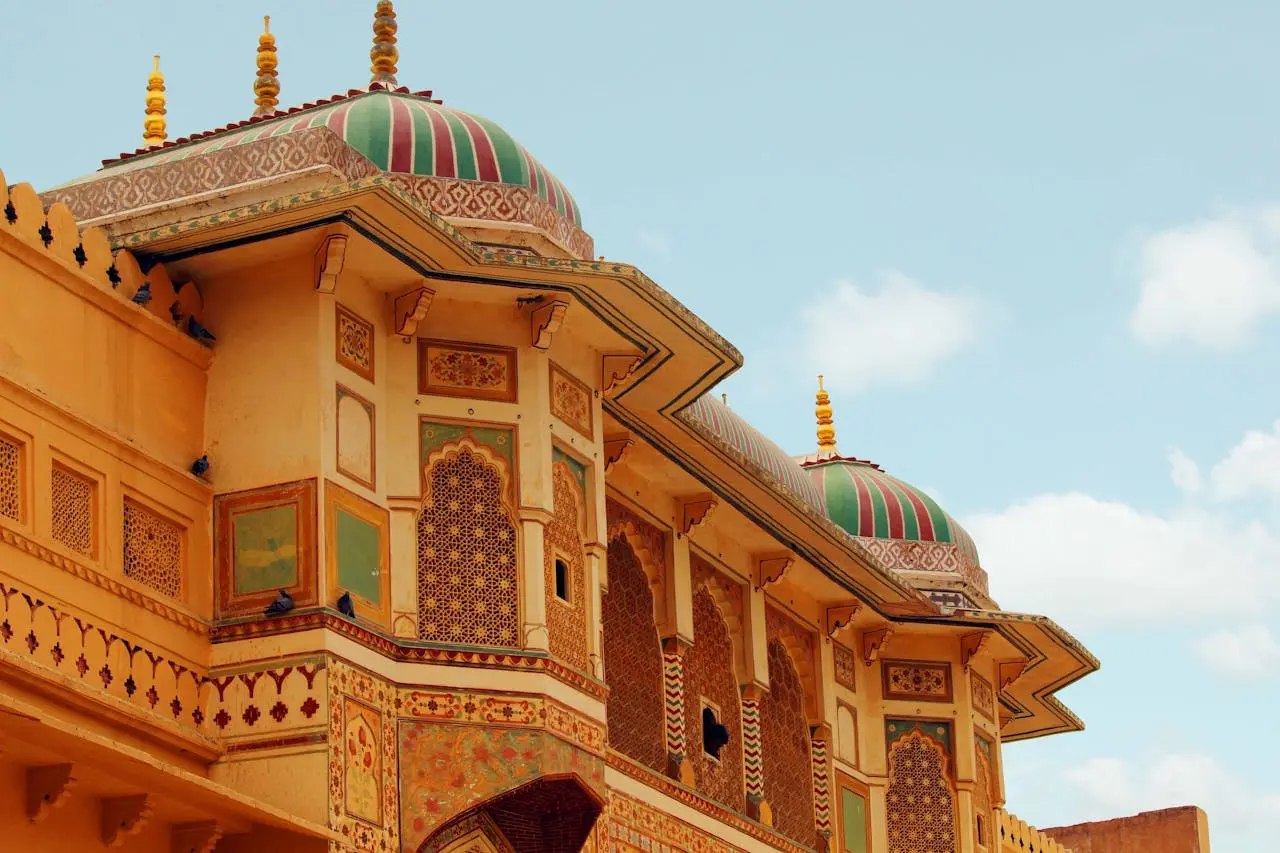
Jaipur, the Pink City, is the spark that lights up Rajasthan, and it’s the top reason to pack your bags for a trip here. As the state’s buzzing capital, Jaipur rolls out the red carpet of history with the pink-hued Hawa Mahal, majestic forts that kiss the sky, and temples that hum with peace. If Jaipur is your first stop, this 2-day Jaipur itinerary hits every breathtaking note and unwraps the city’s most captivating secrets.
Part of India’s famous Golden Triangle, Jaipur sits easily between Delhi and Agra, the city that hosts the glowing white pearl of the Taj Mahal. When you trace the route, the three cities draw a shining triangle across the map. Travelers love this trail for the heady mix of art, stories, and must-see sights—all a train ride or drive apart.
Two days is the sweet spot to soak up Jaipur’s lavish spirit. Although I loitered here for two blissful weeks, I’ve trimmed my favorites to fit your short stay. You’ll find a spotlight on the big sights, plus how to ride the local buses or grab a tuk-tuk, when the weather is at its friendliest, and where to lay your head at night.
Buckle your seatbelt for a two-day ride through Jaipur’s colors and stories. The adventure starts the moment you open this plan.
2-Day Jaipur Itinerary Overview
This 2-Day Jaipur Itinerary is made so you can soak up everything the city provides. You’ll stroll through historic palaces, sip chai in cozy cafés, snap perfect photos, and join memorable tours. Every stop adds a dash of old-world charm and a splash of today’s rhythm.
Day one takes you northeast, where the jewels of Jaipur’s royal past dazzle at every turn. Towering palaces, ivy-clad forts, and ornate doorways invite you to wander and wonder.
Day two brings you back to the city’s heart and south side. You’ll roam market lanes alive with color, pass the must-sees in a blur of energy, and find quiet, local treasures. Jaipur’s music, art, and smiles greet you everywhere.
How to get to Jaipur
Getting to Jaipur from Delhi is simple, thanks to trains, buses, and speedy flights. You just need to pick the transport mode that matches your pace and travel vibes.
By Train
Taking the train is one of the best ways to soak in the sights of the Indian countryside. The Ajmer Shatabdi Express is a great pick, leaving New Delhi Railway Station at 6:05 AM and arriving in Jaipur at 10:40 AM. It has air-conditioned carriages, cozy seats, and serves hot meals, so it works well for solo explorers and families.
For a splash of luxury, book a seat on the Vande Bharat Express. It speeds the route in about three and a half hours while treating you to state-of-the-art comforts and quick service.
By Flight
When you’re in a hurry, a flight whisks you there in about 1 hour. Several flights take off daily from Indira Gandhi International Airport in Delhi and land at Jaipur International Airport. Just remember to add extra time for check-in and security, so the overall travel hours add up.
By Car
Driving from Delhi to Jaipur gives you the freedom to take a detour or two. The usual time on National Highway 48 is about 5 to 6 hours, depending on traffic and how many chai breaks you take.
The newly finished Bandikui to Jaipur Expressway means you can zip between the two cities in only 2.5 to 3 hours. Smooth new lanes and less stopping for traffic are the big reasons for the cut in time.
By Bus
If you’re watching your budget, the bus remains your best friend. The ride stretches between 6 and 7 hours and is run by both state and private outfits. Departures wheel out all day, offering options from plain seating to semi-sleeper and luxury.
Private Transfer
Hire a taxi or book a ride-share. It’s perfect for families or friends, since you can set your own stops and take breaks at roadside sights. Heads-up: you’ll pay more for this, especially with several passengers chipping in.
________________________________________
Planning tips for a smooth journey:
• Reserve Early: Seats go fast in high season. You will need to book way ahead to make sure you’re in the bus or train you want, at a decent fare.
• Double-Check the Timings: Train and bus times can shift, so reconfirm the day of your travel.
• Travel Light: Stick to a small bag for trains and buses. Keep your must-haves—snack, bottle, book, or smartphone—where you can reach them.
• Stay Up to Date: Watch for traffic reports and check the weather forecast. Both can change the way and how long it takes to get where you’re going.
Jaipur itinerary Day 1
I kicked off my Jaipur journey digging into the city’s royal roots. Jaipur wears the crown of being medieval India’s first self-planned city. No chaotic street bustle here—just a smart grid of nine city blocks. Right in the middle, the City Palace rises like a glittering jewel.
Here’s a fun twist: Jaipur wasn’t always the Pink City. The stone first wore a soft yellow, until 1876, when Maharaja Sawai Ram Singh painted everything, even the monkeys, a warm terracotta pink to greet the Prince of Wales (who later became Edward VII). The pink was a friendly wave, like a warm cup of chai, and it stuck.
For Day 1, we’ll slide a little north of the crowds and stroll through the region where the story of royalty spills like mango juice. Picture forts perched on hills, palaces hiding in forests, and gardens spreading like green whispers. This corner of Jaipur lets the land and the walls tell you everything you need to know about the kings who once walked here.
Panna Meena Ka Kund
Start your trip with a stop at the enchanting Panna Meena Ka Kund, a 16th-century stepwell that’s only a short 1-kilometer stroll—just about 0.6 miles—down the path from the grand Amer Fort. After roaming the fort’s ramps and courtyards, the cool, quiet stepwell is a welcome next step.
Standing at the edge, you’ll see perfectly straight flights of steps sink downward, forming an endless staircase of light and shadow that’s easy to get lost in. Each level mirrors the one above it, creating a design that is beauty and brains at once. Originally, the stepwell stored precious water, but it also provided a breezy retreat from the blazing sun. Friends would meet in the shaded alcoves, splash in the cool water at the bottom, and share the news of the day. Even now, the hushed echoes and glints of sun off the water invite you to linger a little longer.
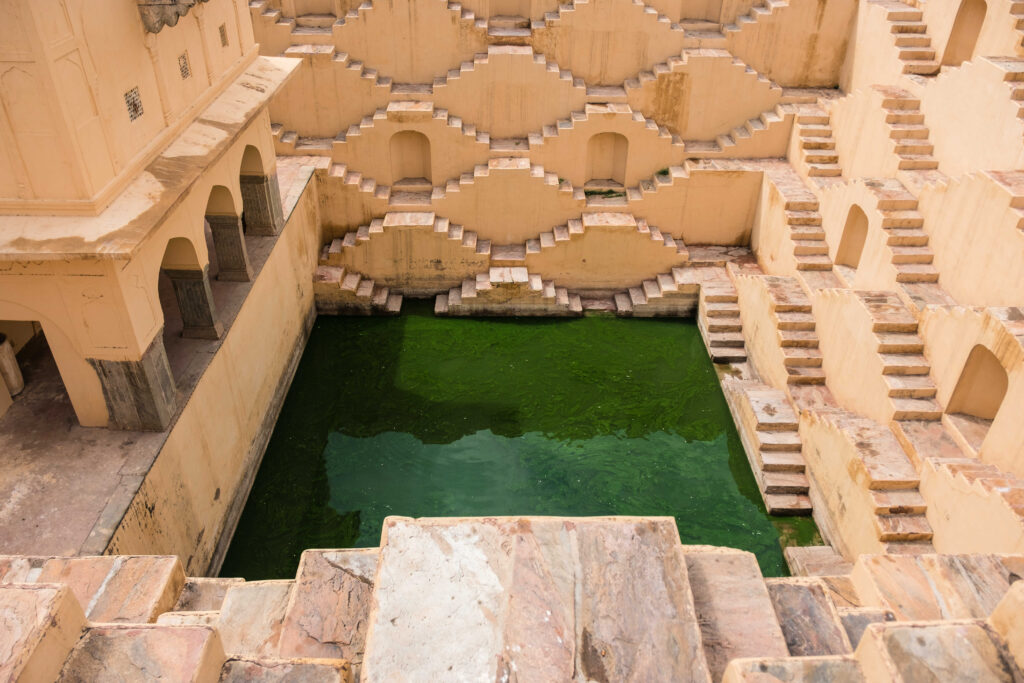
What makes Panna Meena Ka Kund stand out from Jaipur’s other stepwells is its gentle beauty. Most stepwells in Rajasthan are heavy with dark stone, but this one is built from warm, light stone that feels friendlier and more welcoming. Tucked quietly in Amer Village, it’s the kind of place where you can pause, let the world slow down, and drink in the fine build of the place.
Tip: Get here at dawn if you can! We arrived just after 7:00 a.m. and, although the guard was a little slow to arrive, we slipped in through a side gate. If you are an early bird like we are, you can wander the quiet corridors of the stepwell in perfect peace, savor the soft morning light, and beat the rising heat before the crowds arrive.
Check out this half day Jaipur sightseeing tour !
Amer Fort
You can’t really say you’ve seen Jaipur if you don’t walk through Amer Fort, which sits about 11 kilometers (or 6.8 miles) from the city. This massive fort is more than just a local showpiece. The stone exterior glows in the sunlight, the courtyards are filled with echoes of the past, and the views from the ramparts reach for miles—the whole place is a grand, unforgettable show.
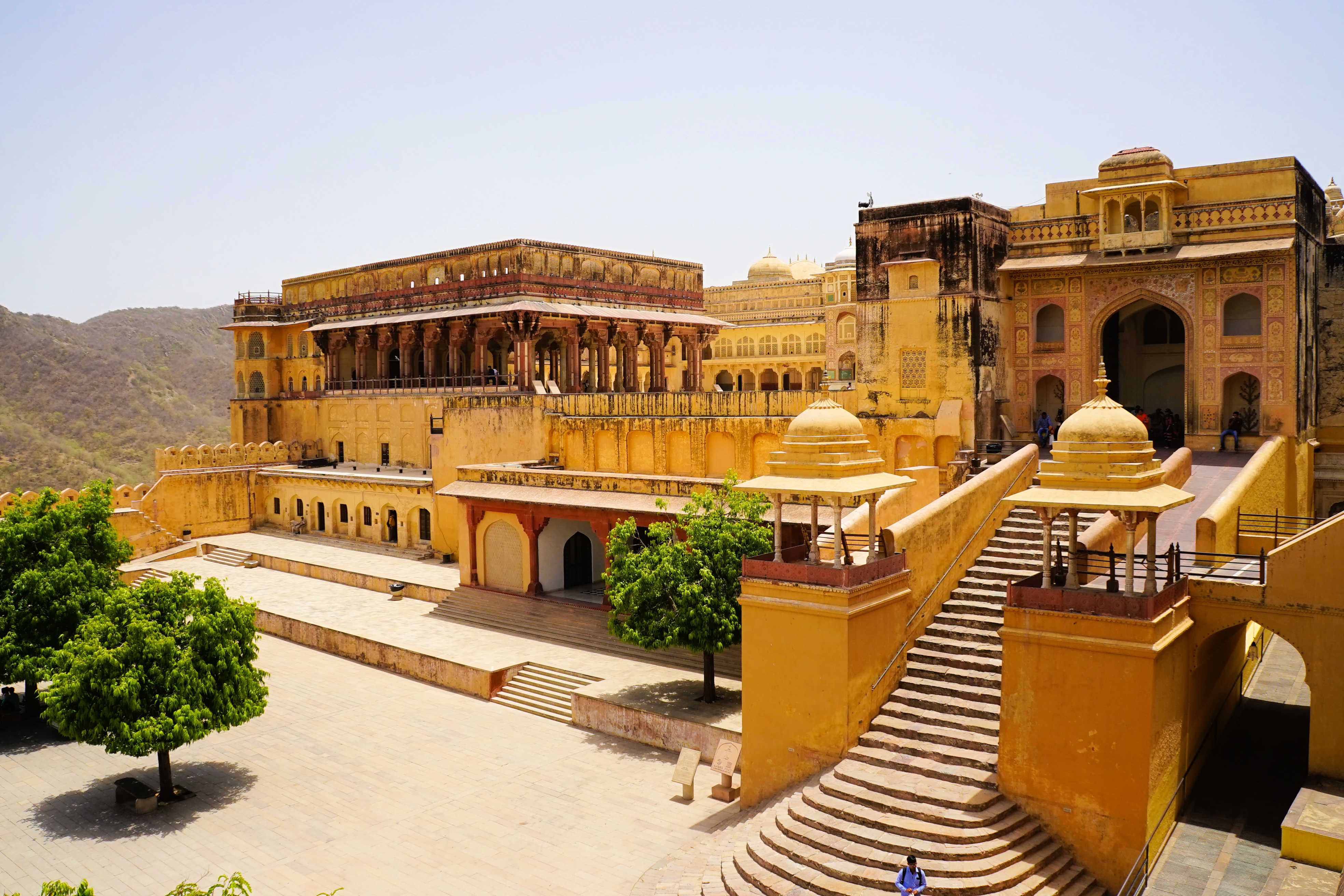
Built in the late 1500s by Raja Man Singh of Amer, the fort was enlarged by Sawai Jai Singh, who wrapped up the last details in 1599, a quarter-century after the first stone was set. Walk through the great gates today, and you are wrapped in the sounds and colors of a past that marries Mughal grace with Rajput boldness.
Among the forts of Jaipur, and of all Rajasthan, Amer Fort still holds my heart. I’ve walked the ramparts of Mehrangarh, Jaisalmer, and Bikaner, yet none matched Amer’s blend of story, splendor, and sheer size. Do not end your Jaipur visit without standing in its shadow.
Jal Mahal (Water Palace)
On your way from the forts toward Hawa Mahal, you’ll glide right past Jaipur’s jeweled dot on the lake: Jal Mahal, the Water Palace. You won’t need more than a brief stop, but the postcard-perfect scene is too lovely to let slip by without a picture or two.
Floating between soft blue waves, the palace seems to hover like a painted cloud. Maharaja Sawai Pratap Singh had the building finished in 1699, not as a grand palace but as a quiet hunting lodge. On still mornings, the maharaja and his friends drifted across the lake, rifles in hand, in search of duck—listening more to the lap of water than to the city’s noise.
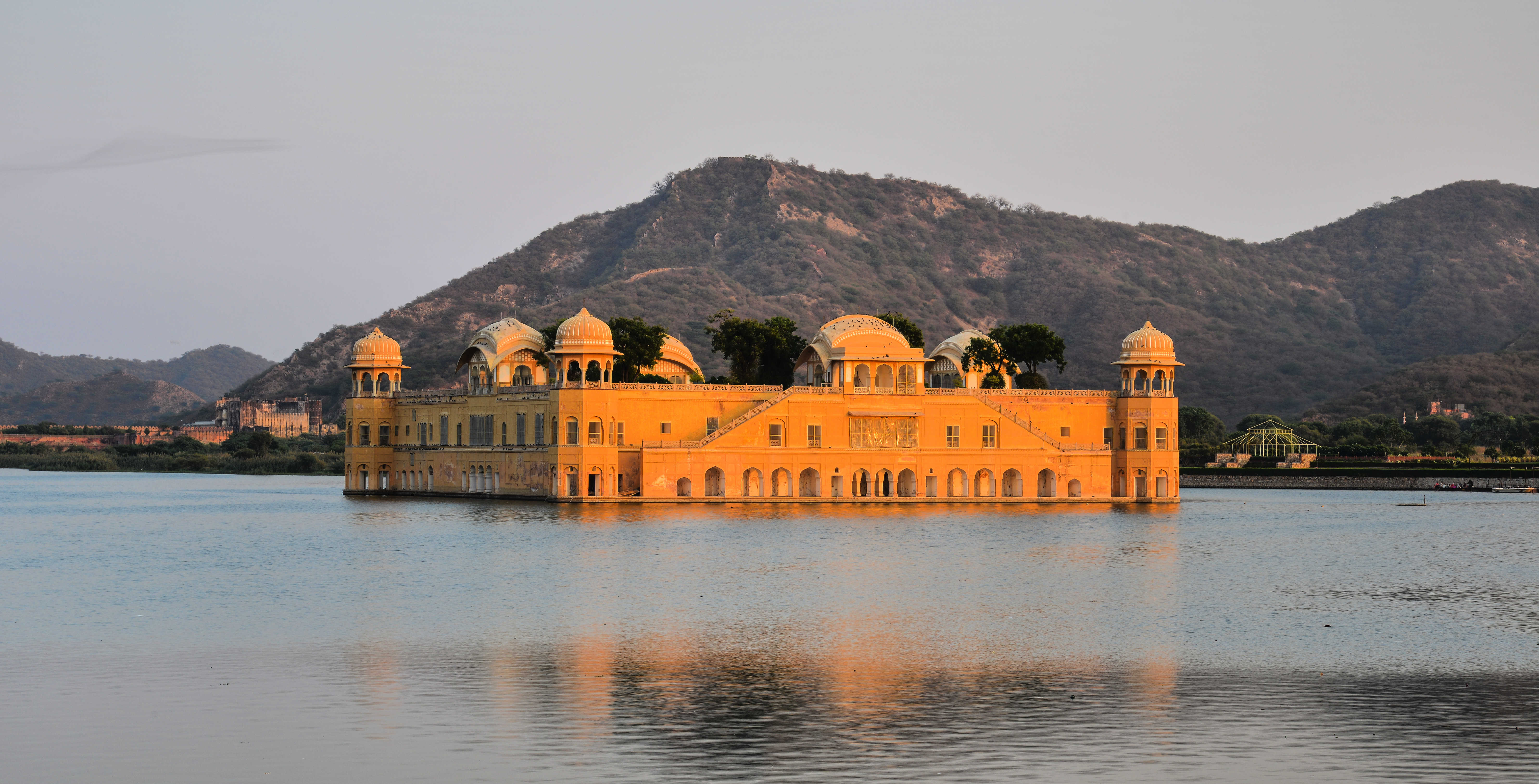
Visitors can no longer wander the palace halls, but from the shore the sight is still magnetic. Arched loggias, delicate balconies, and pink and white stone glimmer where Mughal grace meets Rajput strength, framed by the lake’s gentle undulations and the soft swell of the hills behind.
Tip: Pause for about ten minutes, let the lake breeze cool your skin, and line up your camera. You’ll tuck another spellbinding memory into your Jaipur adventure without losing your travel rhythm.
Grab a lunch in Jaipur
After a day soaking in Jaipur’s palaces and forts, I like to reward myself with a proper lunch, and the city’s heritage restaurants are the perfect reward. I don’t know about you, but I could wander around magnificent old buildings forever, so I always feel at home in places like The Rajput Room at Rambagh Palace or Samode Haveli’s restaurant.
These spots are more than for eating; every arch and chandelier whispers stories of maharajas, and eating here feels like stepping into a living museum. I never regret spending a little extra for the magic of lunch served on silver trays in a room that’s a jewel itself.
But if the wallet is a little tighter or a quick recharge is needed, Jaipur is full of great—and pocket-friendly—plans too. I love slipping into Handi Restaurant, where the rooftop wraps you in fresh breeze and the city’s gentle chaos. The curries here are like hugs; the tandoori breads puff in seconds, and the view of the Pink City under the afternoon sun is a treat you don’t need to dress up for.
If you’re on the hunt for a restaurant that serves up more than just great food, Kitchen With A Cause is a one you shouldn’t miss. The dishes are made with local Indian spices and are rich in flavour.
Jaigarh Fort
Right next to Amer Fort, Jaigarh Fort makes a great stop for your first day in Jaipur. Since the two forts are a short walk apart, you can easily see both, and Jaigarh gives you a fresh angle on the city’s royal history.
Built in 1726 by Jai Singh II, the same ruler who enlarged Amer, Jaigarh was designed to guard Amer Fort from enemy raids. As you stroll along the strong, high walls and climb the watchtowers, you can almost hear the clang of swords and see the soldiers who once patrolled the fort’s rocky ramparts.
A favorite sight here is the Jaivana Cannon, a colossal bronze gun from the 18th century and, in its day, the largest mobile cannon in the world. Standing beside it, you can feel the weight of its barrel and imagine the thunderous boom that echoed through the valley on test firings.
The fort’s real treasure, though, is the view. Set on the ridges of the Aravalli hills, Jaigarh lies the entire landscape at your feet: the golden walls of Amer Fort, the shimmering surface of Man Sagar Lake, and the sprawling city of Jaipur in the distance. Cameras and hearts race to capture the scene, while history lovers map the tales told by every stone.
Tip: As you wander between Jaigarh and Amer Fort, take your time. Linking the two forts lets you feel how Jaipur’s royal story really once beat.
Gatore Ki Chhatriyan
A little below Nahargarh Fort’s slopes, Gatore Ki Chhatriyan waits like a quiet, sunny thought. Here, space and silence hold royal history. The last resting place of Jaipur’s maharajas, it collects graceful marble cenotaphs, one for each king, like quiet sentences in a slowly written story. Birds tweet above, and time almost forgets to hurry.
Gatore, they say, means in Hindi the “resting place of the gone,” and the name suits the gentle land. Still, calling it a cemetery feels wrong; the ground feels alive. Each cenotaph glows under the Jaipur sky, its ceilings pierced with tiny lotus blooms, its columns threaded with swirling vines, telling of an art once meant for living rooms, now guarding memory. Here, every carved petal and polished curve invites wonder, whether history pulls you in or the love for beautiful things.
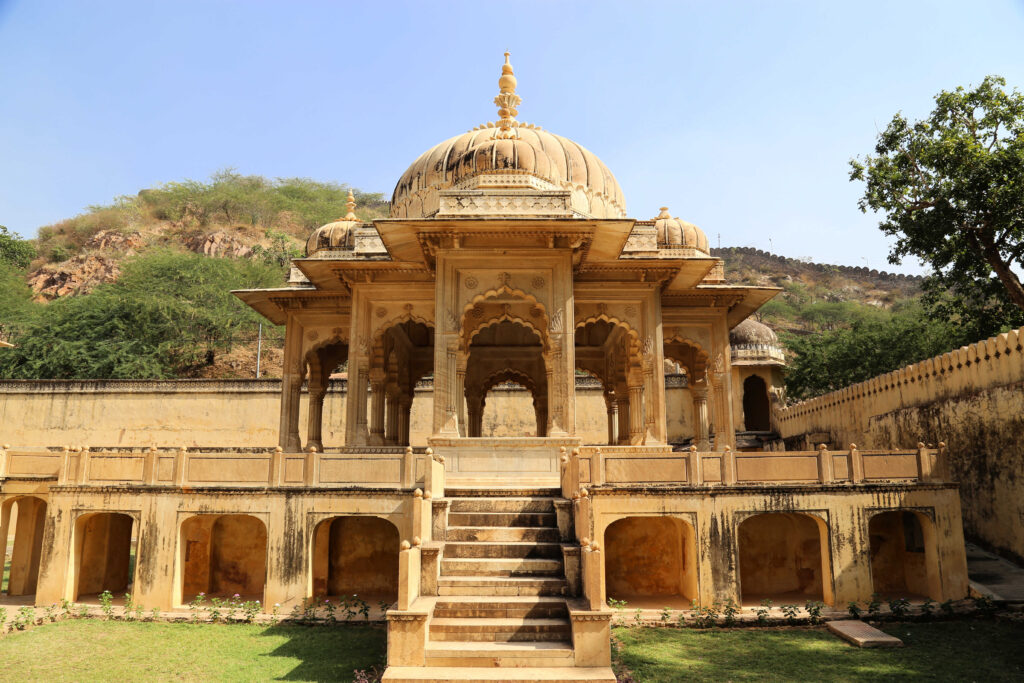
What I loved most about this place was the hush that wrapped around it. Unlike the busy forts and markets, Gatore Ki Chhatriyan is usually quiet, so you can hear the wind and the whispers of history all at once. The shaded trees, the pink arches, and the far-off shape of Nahargarh Fort make the scene feel like a gentle dream, and you can stop here for a while to let your thoughts settle.
Tip: If you need a slice of beauty and peace while exploring Jaipur, Gatore Ki Chhatriyan is the spot to find it. This quiet treasure carries its stories softly and invites you to breathe slower, far away from the crowds.
Jaipur Itinerary Day 2
On your second day in Jaipur, jump right into the heartbeat of the city. You’ll stroll streets alive with color, bustling with rickshaws and spices, and dotted with famous sights that definitely want a spot in your travel journal.
Hawa Mahal
Hawa Mahal, or the Palace of Winds, is like the crown jewel of Jaipur. Built in 1799 by Maharaja Sawai Pratap Singh, the pale pink beauty is the city’s most famous face. Its 953 tiny windows, or jharokhas, are delicately carved and form ghostly patterns like lace; once they let the royal women peek at the streets while staying hidden.
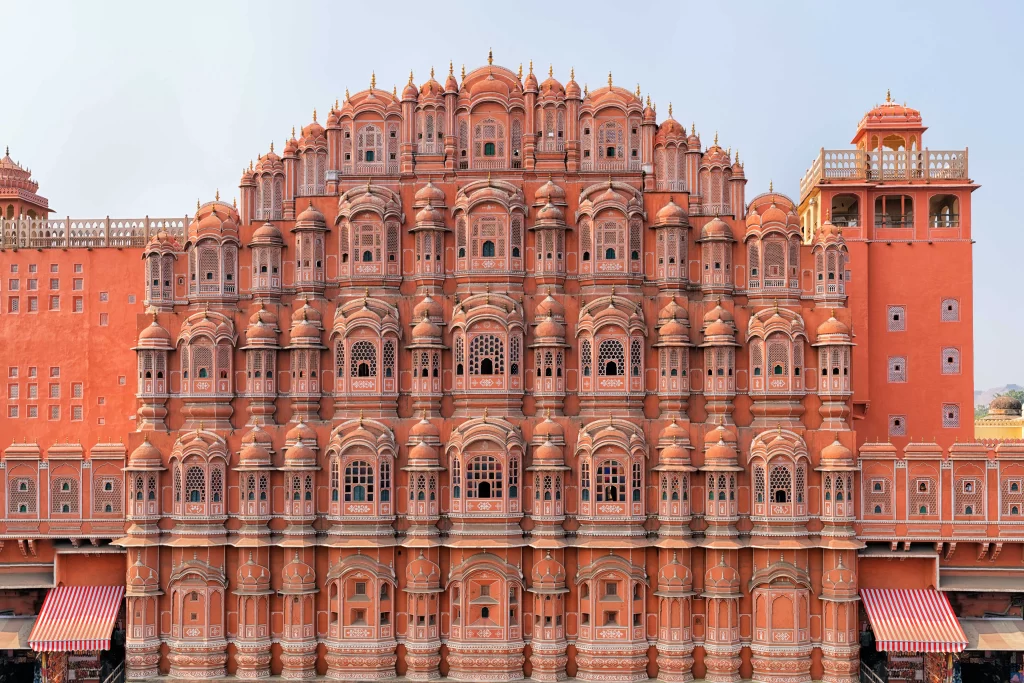
The cool, breezy look is enchanting. Stand a little way back and let the rising walls and shimmering stone draw your eyes. You’ll want to circle around and peek down the little alley at the back, where the palace reveals a surprising curve. The way the pink glows and the shadows deepen is a moment you won’t forget, whether you snap a photo or just store it in your memory.
Pro Tip: If you want the best view of Hawa Mahal, just zip up the stairs of one of the buildings on the opposite corner of the street. The top floor is free, but watch out—smooth-talking shopkeepers will beckon you into their stalls the second you step outside. If you’d rather kick back, a couple of nearby restaurants serve up great plates of food and perfect plates of the palace at the same time.
City Palace
No Jaipur adventure is complete without a stroll through the City Palace. This place is a living postcard, mixing Mughal arches and Rajput carvings into one dazzling scene. Right in the city’s center, it’s the perfect doorway into the stories of the old kings and queens.
Want to dodge the big crowds and snag those flattering early-morning selfies? Show up at 9:15 and the ticket windows will be just waking up for the 9:30 opening. You’ll be inside with only a couple of other early birds and a million unspoiled views—exactly the way to stand in a grand throne room and feel like you belong.
Plan to set aside at least two hours to wander through the palace, because each corner seems to sparkle with tiny details that catch your eye. The whole place stretches across courtyards and gardens and endless graceful buildings. You can get two kinds of tickets: one that takes you to the usual spots, and one that opens the entire complex. If you really want to soak it all in, go for the all-inclusive pass, which also brings you to the museum and the hidden gardens.
The star attraction is the Chandra Mahal, a tall, seven-story tower where the royal family still keeps some of their chambers. You can only step into the ground floor, but it is still a delight. This level holds a museum filled with old royal carpets, delicate manuscripts, and other jeweled heirlooms that tell stories about the family.
The complete ticket costs INR 2500 (about $35), but for the wow of the arches, the colors, and the stories wrapped in every stone, you’ll feel you got a bargain. A stroll through the City Palace is more than a walk; it is a walk into the heart of Jaipur’s royal past, where each room whispers of the delicate, clever hands that built the city.
Patrika Gate
A breezy walk from City Palace leads straight to the Patrika Gate, the city’s newest show-stopper and brightest splash of color. Built in 2016 by the Patrika newspaper folks, this bright monument may not wear centuries of history, but in no time it has marched to the front of everyone’s must-see list.
The tall, arching entrance opens to the shady stretch of Jawahar Circle Garden, and it’s way more than a pretty postcard. With every step under the soaring arch, Rajasthani stories leap to life in painted patterns, sparkling in every shade of the rainbow. Peacocks and forts, tunes and turbans—each carved curve brings a piece of Rajasthan’s beating heart straight into your hands.
A short stroll will show you the whole gate, but your camera will probably work overtime. The rainbow colors, the fine patterns, and the cheerful brows of the garden behind it turn every snapshot into a tiny work of art. Sit for a moment, let the stories wash over you, and fill your phone with memories of Jaipur’s soul—neat, colorful, and waiting just for you.
Birla Mandir
While you’re moving between Patrika Gate and the Monkey Temple, make a quick stop at Birla Mandir, which is perfectly nestled between the two. The stretch between them is just about 6 km (3 miles), and sliding into an auto-rickshaw or a taxi will keep the ride nice and easy.
Built in 1988, Birla Mandir is one of 14 temples the Birla Foundation created, a gift from the wealthy Birla family to the people. The temple shines in shimmering white marble, giving off a gentle light that feels calm and grand at the same time. It is devoted to Goddess Lakshmi and Lord Vishnu, and everywhere you look, you see detailed carvings and graceful statues that tell the story of India’s deep religious and architectural history.
Spending just 20 minutes here will let you soak in the quiet, the lovely design, and the uplifting spirit of the place. When you’re ready, leave the calm of the Mandir behind and set off for the Monkey Temple, where a whole new adventure is waiting.
Galtaji Temple
Jaipur’s famous Monkey Temple—offers guests a little mini adventure from the moment they arrive. Located just 9 km from Birla Mandir, the final climb to the temple is a mellow 15- to 20-minute hike straight uphill. The slope is gentle, and the trail winds through the friendly, rocky arms of the Aravalli Hills. The trees, the light wind, and the layers of green and brown all around you feel like nature’s own invitation to keep going.
The best—or funniest—part is the monkeys. They scamper across the path, swing from branches to branches, and watch you curiously. Most of them ignore you, but a few might pretend to steal your water bottle or your hat. If you’d rather keep your snacks to yourself, hold tight to everything. They aren’t dangerous, just playful. The hill path, with its cheeky crew of monkeys, is a big reason why the walk is more like a festival than a workout.
If you’d rather not climb at all, talk to a rickshaw driver at the bottom; he might know a back road to the temple that skips the climb and, with some luck, still lets you see a few monkeys from the seat.
When you arrive at the temple, the first thing you notice is the bubbling spring that feeds into seven shimmering pools. Pilgrims come to dip in the water, hoping to wash away their sins, but slip in during the calm hours, and you might see a troupe of monkeys splashing and grooming one another instead—a joyful, unexpected moment!
In the main square, a stately temple awaits, and here the priest will gently sprinkle holy water over you if you offer a small donation first. The ringing of bells, the fragrant marigolds, and the wild, rocky hills framed against the sky lend a peaceful kind of beauty that settles in your mind and heart long after you leave.
Take a deep breath and stroll slowly through the fragrant courtyards and steps. Listen to the water, watch the monkeys, and let the calm soak into you. Whether it’s the cool spring, the blessing, or the cheeky monkeys that draw you here, Galta Ji is a jewel you’ll carry home from your Jaipur days!
How to Get Around Jaipur
When you’re in Jaipur, it’s easy and cheap to get around, and you’ve got a bunch of choices to fit what you like best. Whether you’re wandering the Pink City solo or with a guide, you can move around without any fuss.
Private Tour with a Guide
If you want to pack the most fun into two days in Jaipur, snagging a private 8-hour guided tour is the way to go. With a friendly expert beside you, you can hit all the big spots—Amber Fort, Jal Mahal, Hawa Mahal, Jantar Mantar, the City Palace, and the Monkey Temple—while hearing awesome stories that make the sights come alive.
Hiring a Driver
If you like to go with the flow, ask your hotel to book a driver for the day. Generally, you’ll pay between 1500 and 2000 INR. It’s a cozy way for you and your crew to move from place to place without the fuss of buses or auto-rickshaws. This is especially nice for families or groups who want to keep everyone together.
Tuk-Tuk/Rickshaw
Tuk-tuks, or rickshaws, are the go-to wheels for quick trips around Jaipur, and they won’t drain your wallet. Just wave one down, ask how much it’ll cost, and if you agree, jump in. For around 100 INR you can usually reach anywhere in the Pink City or the spots that are just a little further out.
Little tip: Nail down the price before you sit down, especially in a tuk-tuk. They keep your money safe, but a friendly bit of bargaining never hurts. If the driver can’t chat in English, total silence is cool—just point to the spot on your map and show him your 100 INR, and you’re set.
Best Time to Visit Jaipur
The sweet spot for visiting Jaipur is the winter, from October to March. The weather is just right for wandering: it hovers between 8°C and 25°C (46°F and 77°F). Skip the blazing heat of summer and you’ll be free to stroll around forts, haveli, and markets without melting.
The monsoon season from July to September can be a fun choice if you like a little rain now and then. Just be ready for sticky humidity and weather that can change its mind. Summer, from April to June, is best forgotten—temperatures can blast past 40°C (104°F), turning any outdoor plans into a sweat test.
How to Extend your 2 Day Jaipur Itinerary
Stop by the Albert Hall Museum in Ram Niwas Garden; it’s full of Rajasthani treasures and tells the stories of the state.
Head to the quiet village of Samode for the day—its dreamy Samode Palace and ornate havelis make wandering feel like a fairytale.
Kick off a morning in a hot air balloon; you’ll drift over the forts and palaces, and the sunrise glow is like living in a postcard.
Get lost in the colors of Johari and Bapu bazaars; pick up silver jewelry, patterned textiles, and tiny mirrors that catch every ray of light.
If you prefer quieter adventures, wander the trails at Nahargarh Biological Park, where you might spot exotic animals and hear only the rustle of leaves.
Are 2 Days in Jaipur Enough?
Yes, 2 days in Jaipur is enough to cover all the major highlights mentioned in the itinerary, including iconic landmarks like Amber Fort, Hawa Mahal, City Palace, and Jal Mahal. You’ll have a fulfilling experience and get a good feel of the city’s rich history and culture.
However, if you have the luxury of more time, I would highly recommend extending your stay to 3 or 4 days. This would allow you to spend more time at each attraction, enjoy the local markets, or explore off-the-beaten-path sites like the Samode Palace or Nahargarh Fort, and also indulge in the city’s delicious food. More time means you can truly immerse yourself in Jaipur’s vibrant atmosphere!
Where to Stay in Jaipur
Jaipur has places to sleep for every kind of traveler—swanky resorts, friendly little guesthouses, and everything in between. Here are my top picks for every pocket:
The Leela Palace
When only the finest will do, The Leela Palace stands like a jewel. Plush rooms, neatly trimmed gardens, and shimmering swimming pools create a fairy-tale backdrop for anyone wanting to slow down and sink into luxury. Perfect for a real treat, whether for a night or a few.
All Seasons Homestay
Want a touch of home while you travel? All Seasons Homestay welcomes you like family. Just a 4-km (2.8-mi) drive from the busy heart of Jaipur and a quick hop from the railway station, the cheerful house is full of bright colors and comfy corners. The breakfast served in the cozy little restaurant is reliably tasty, and many rooms spill out to a balcony with a pretty little view of the everyday bustle.
Anuraag Villa
If you’re looking to save some cash, check out Anuraag Villa. I stayed here for two weeks while I was in Jaipur, and it was one of the best places I found. The rooms are spacious, the staff are super nice, and the wifi actually works, which is a win for any traveler. The hotel sits in a residential neighborhood about 4 km (2.8 mi) from the city center, so it’s a nice, peaceful spot if you’d rather dodge the city noise.
These choices cover all the bases, so you’ll have a great time in Jaipur no matter how much you want to spend!
Quick Links and Related Blogs
Quick Links and Related Blogs
These itineraries will help you learn more about either city:
- Jaisalmer 2-Day Itinerary: See Jaisalmer in two days
- Jaisalmer 3-Day Itinerary: Get to know Jaisalmer better
- Jaipur 2-Day Itinerary: Explore the Pink City of Jodhpur
- Jodhpur and Jaisalmer Itinerary: The best combination of two cities
