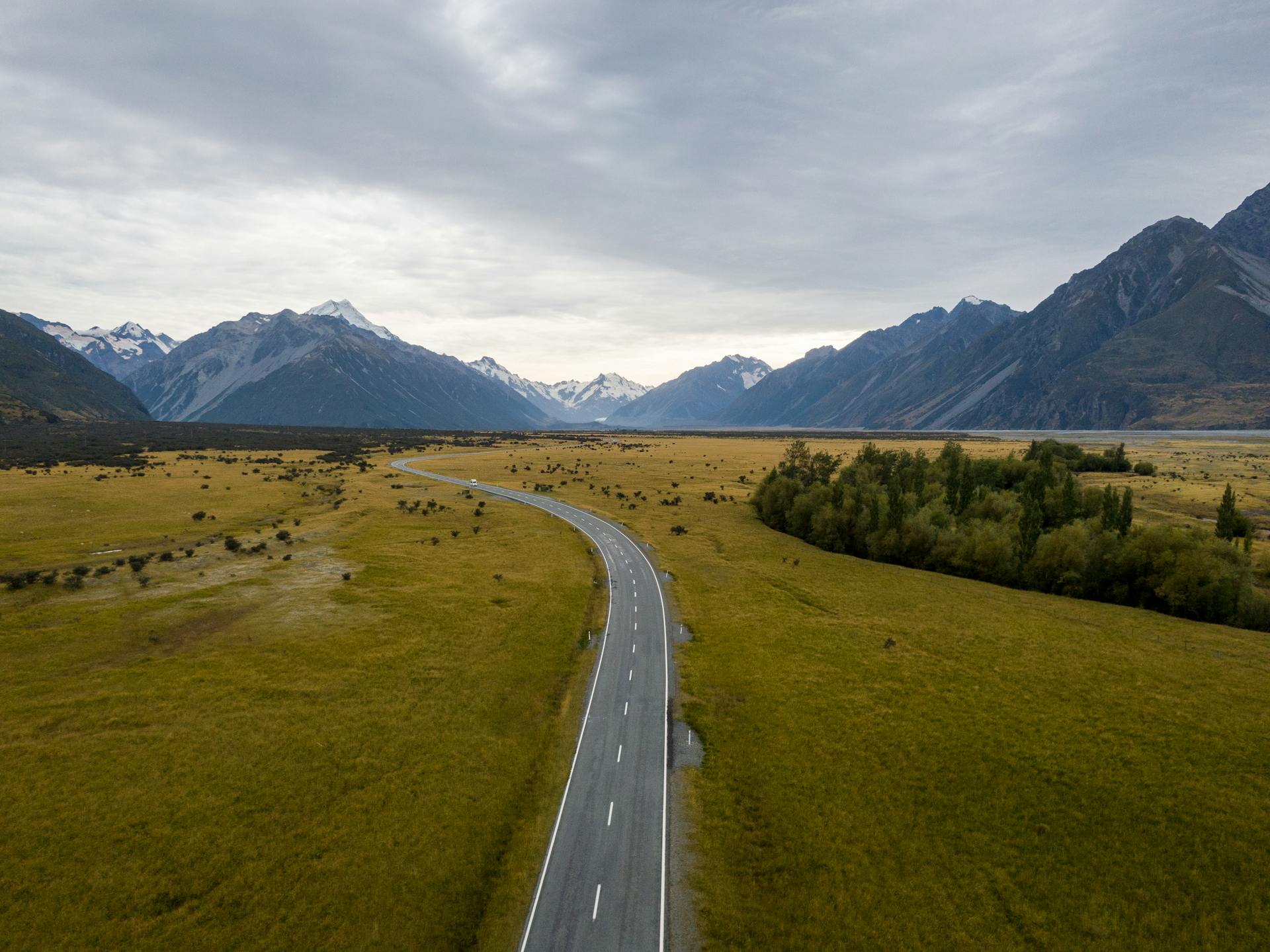
Why the South Island Beckons the Road Tripper’s Heart
In the archive of my fondest journeys, the South Island of New Zealand holds the loudest cheer. Here, the tarmac seems to rewrite the very definition of a thoroughfare, becoming a memoir in motion. Once the last vestige of city noise fades, the horizon lifts into jagged, snow-edged peaks, liquid sapphire lakes glimmer under the sun’s slow burn, and a coastline so untamed whispers of countries yet to be dreamed.
The South Island’s gift to the nomad is the kaleidoscopic pace of its geography. One afternoon’s circuit can drift from quilted emerald ridges to mirror-calm lakefronts, rise breathlessly over granite passes, then slip quietly to a hush of white-shell sands. At every bend a new continent is handed to you. Morning coffee can be ocean-brewed, the afternoon’s hike can touch ice, and the night can stretch beneath a vault of stars so transparent that the constellations seem to hold their breath. And all of this, astonishingly, stays within the generous palm of a single island.
Over the years I have crossed several continents on road trips, yet I still believe the South Island delivers the rare synthesis of convenience and grandeur. Its scale is generous enough to spark the sense of true journey, yet modest enough to render a sweeping itinerary feasible in a matter of days. The outstanding feature is the relentless proximity of beauty; a refuelling stop on the outskirts of a tiny township may of a sudden reveal a frame-destroying panorama of snow-dusted peaks.
Why Take a South Island NZ Road Trip
The quality of driving itself in the South Island holds me as surely as the destinations do. In some places, I skip the in-between stretches, yet here each curve of road is a ribbon of fascination. Emerald lakes mirror the aquamarine sky, braided rivers thread beneath knotted beech trees, and every hour the light shifts. The South Island invites me to linger, rewind, and pay attention in ways I cannot on a map.
Consider the drive from Christchurch to Queenstown. The distance stretches beyond measurement; the distance stretches the soul. The journey begins across the Canterbury Plains, where neat, infinite borders of green and gold meet the slate-blue silhouette of the Southern Alps. The next scene opens at Lake Tekapo, the world’s most startling blue, a blue that almost hums, the sun slicing through the water like a blade of light. The road then curls into the Lindis Pass, where gold and bronze tussocks undulate like a soft, silent sea under a wide bowl of sky.
Just when the heart thinks it has gathered every imaginable picture, Queenstown appears—an emerald bay cradled by the knife edges of the Remarkables and the long, quiet spine of Lake Wakatipu. the kind of landscape that makes camera batteries surrender. You stop, again and again, every few kilometres, the same road handing you a new masterpiece.
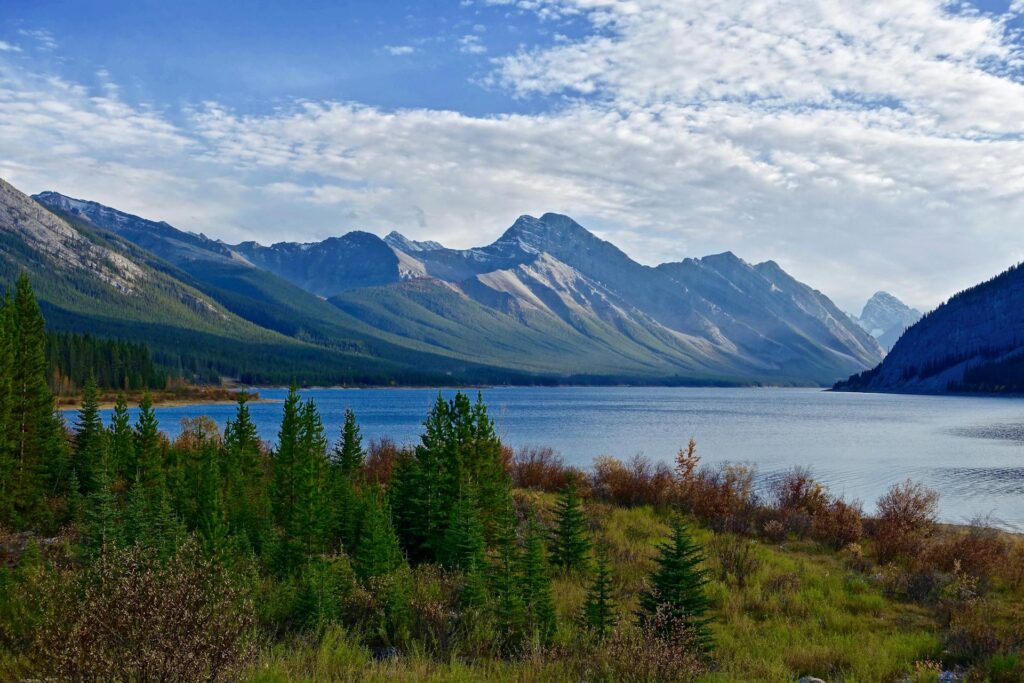
Why This Guide Will Be Your Essential Road Trip Resource
Planning my inaugural road trip around the South Island set my mind racing, not due to a shortage of highlights but the sheer abundance of them. Should I linger longer among the fjords or the mountains? Is the West Coast detour justified? How can I squeeze in the ever-appealing small towns that keep cropping up in my research?
This experience prompted the creation of the Ultimate South Island Road Trip Guide, designed to spare you the endless search for scattered facts. Whether your schedule spans five days or three weeks, you’ll find itineraries, practical advice, and behind-the-scenes insights that streamline your experience.
Inside the guide, you’ll locate:
- Route suggestions tailored to different trip lengths, from swift getaways to extended explorations.
- Comprehensive profiles of key destinations, along with undervalued sites not typically featured.
- Clear guidance on driving in New Zealand, covering essential road rules and the best places to refuel.
- Curated links to in-depth resources on towns, attractions, and scenic routes, enabling you to explore at your own pace.
Picture this guide as both your navigator and enthusiastic travel companion, getting you to the must-see spots, suggesting those unexpected side roads, and naming the cafés where the flat white actually tastes like a hug in a mug.
Anticipating your South Island road trip? Here’s the kind of scenery that will keep you pulling over to lift the camera.
The lakes will stop you; Lake Tekapo’s turquoise flatness and the stiller, quieter Lake Pukaki, both framed by Mount Cook, feel like someone dialled up the saturation on a perfect reflection, then dialled it down to a moment of awe.
You’ll climb mountain passes that curl up to the sky, like the steep, braided roads of Arthur’s Pass and the chill bite of trails near Mount Aspiring, where the clouds hang low and the air tastes like fresh granite.
The coast will roar at you; the solitary trumpeting of seals at Kaikōura, the smooth, wind-sculpted cliffs of the Catlins, and road ends where ocean battering against rock feels like an invitation to stand and watch for whales.
Between the wilds, towns balance the epic; you’ll hear the bagpipe echoes of Dunedin street corners and feel the pulse of Queenstown’s evening climb-on-the-rope glow, whether your plan is to jump out of a plane or just watch someone else do it.
And the island hands you wildlife like an unexpected gift: a flashing white flipper as a pod of dolphins arcs, the sudden still posing of a rock-hopper, and, if you’re quiet enough offshore, the low-on-the-horizon surface of a migrating whale.
Whatever your reason for the trip—heights that make your heart race, images you’ll hang on a wall, trails that pull you into the quiet, or the simple happiness of open, undirected driving—the South Island wraps it all up and hands it out in generous, wild layers.
Affix your seatbelt, curate your playlist, and prepare for possibility. Whether your window of days measures five or twenty-one, this compendium will steer you toward the ideal odyssey across the South Island—from the deliberate streets of Christchurch to the dramatic promise of Queenstown and all the wonder in between.
Essential Planning for Driving in New Zealand
When I began mapping out my South Island road trip, I quickly discovered that having a handful of key details at my fingertips made each leg of the journey far easier. Below is a compilation of everything I wish I’d had front-of-mind before turning the first key—from the ideal travel window, through likely costs, to the safest driving practices.
Best Time to Road Trip South Island
The first primary choice is timing.
If your sights are set on warm weather and long, sunny days, the period from December through February (the southern summer) delivers. The lakes radiate striking blues, hiking routes are in excellent shape, and the coastal roads seem to emerge from a postcard. The trade-off is that this is high season, meaning you’ll want to secure accommodation and rental vehicles several months ahead.
For a mellower crowd and still-pleasant weather, I recommend the window from March to April (autumn) without hesitation. The autumn leaves in areas like Arrowtown create a vivid tapestry, and daytime temperatures remain kind. Winter—June to August—brings a different kind of beauty, draping the landscape in snow and making it simple to pair coastal drives with a few days on the ski slopes.
For a complete overview of seasonal weather, event timing, and visitor density, refer to my –
[Best Time of Year to Road New Zealand guide]
Driving in New Zealand Tips: Regulations and Safety Considerations
Overall, navigation here is uncomplicated, yet a handful of local practices trip up newcomers.
First, remember to stay on the left. While it seems self-evident, habit can mislead if your reflexes trained on the right and lanes appear the same.
At roundabouts, yield to any vehicle approaching from your right.
Across the countryside, you’ll frequently find single-lane bridges: reduce speed, read the signage, and yield as posted.
Be prepared for sudden bends and unsealed roads, especially in outlying areas.
Monitor your fuel gauge closely; the West Coast, for example, has long stretches between stations.
The general speed limits are 100 km/h on open roads and 50 km/h in urban zones, unless indicated otherwise. Personally, I often reduce speed simply to take in the scenery—and because the occasional sheep has chosen the centreline for an afternoon rest.
For more detailed information on local road laws, safety guidelines, and rental tips, see our complete guide to Driving in New Zealand: Rules, Tips & Safety.
South Island Road Trip Durations and Distances
While the South Island appears compact on a map, the driving times can be deceptive. Meandering roads and frequent photo opportunities can stretch even modest distances beyond the anticipated time.
Based on my journeys, these times can serve as rough benchmarks:
- Christchurch to Queenstown: 480 km, taking approximately 6 to 7 hours (scheduled without breaks)
- Queenstown to Milford Sound: 287 km, taking about 4 to 5 hours (one direction)
- Christchurch to Nelson: 420 km, taking roughly 5.5 to 6.5 hours
- Franz Josef to Wanaka: 285 km, taking approximately 4 hours
A trip lasting 7 to 10 days permits a visit to major sites such as Queenstown, Wanaka, Milford Sound, and the West Coast glaciers. If you have two to three weeks in hand, you can choose a more leisurely itinerary, adding locations such as Abel Tasman, Mount Cook, and the Catlins.
South Island Road Trip Costs
Anticipated costs will vary according to your travel preferences. After my own outings, I can suggest these ballpark figures:
- Car rental: NZD 50 to 100 per day for a standard vehicle; NZD 120 to 200 for a campervan.
- Fuel: Around NZD 2.70 to 3.20 per litre.
- Accommodation:
- **Budget hostels**: NZD 30–50 per night (shared dorm)
- **Mid-range hotels/motels**: NZD 120–180 per night
- **Campsites**: NZD 10–25 per person
- **Food**: Cafes charge NZD 20–25 per meal; you’ll save by cooking from grocery supplies.
Certain activities, like heli-hikes over glaciers or scenic flights, will elevate your expenses, yet I believe they return unforgettable value.
Map of the South Island Road Trip Routes
Whenever I begin planning a new road trip, the first thing I do is open up a map. For the South Island, that moment is when the journey moves from intention into the realm of the tangible. Following the ribbon of winding roads that link snow-dusted summits, iridescent lakes, and the untamed coastlines is a sight that stirs a spontaneous urge to load the car and drive off into the horizon.
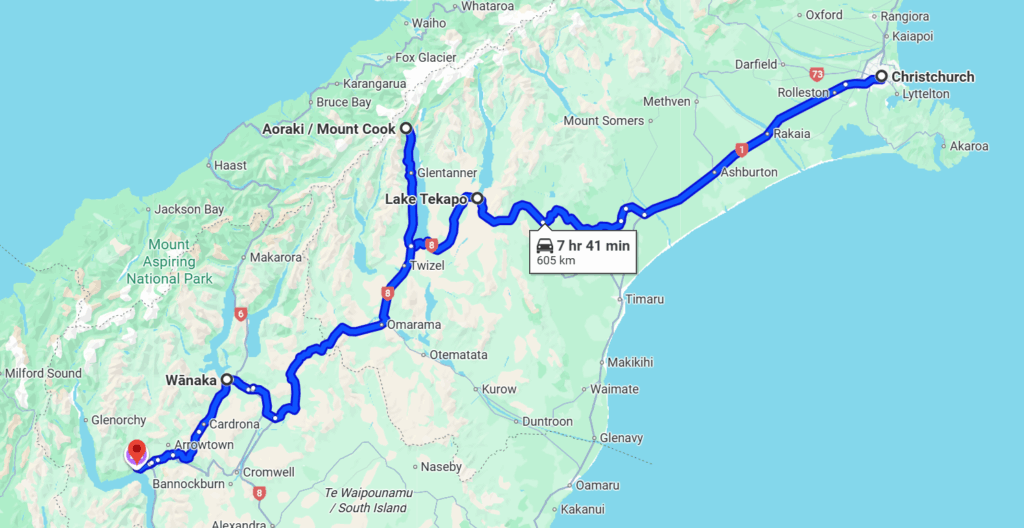
Christchurch to Queenstown Route
If a single itinerary could stand as the signature South Island road trip, it would be the stretch that carries you from Christchurch to Queenstown. This drive weaves you through some of New Zealand’s most arresting canvases: the glassy repose of Lake Tekapo, Lake Pukaki’s gauzy blues, and the granite crown of Aoraki/Mount Cook National Park. You may opt for the straightforward ribbon of blacktop, or you may linger and linger again at the viewpoints. Either choice cements a fondness for the island that stays long after the wheels stop turning.
[Read: Christchurch to Queenstown: The Ultimate Road Trip]
Alternative Scenic Routes to Consider
The established Christchurch to Queenstown route certainly deserves its accolades, yet the South Island provides several equally stunning diversions:
Milford Sound Route—Launching from Queenstown or Te Anau, this highway traces the verdant valleys of Fiordland National Park, finally revealing one of the planet’s most arresting fjord vistas.
Dunedin Coastal Route—Follow the southeastern shoreline and witness the three-way fusion of wildlife, geology, and Victorian memory. Gaze upon albatross wheeling over cliffs, wander through ornate period buildings, and perhaps spot a little blue penguin shuffling across the sand.
Nelson via Kaikōura Drive—From Christchurch, drive north through Kaikōura’s marine reserve, where dolphins and seals are your co-pilots, and then glide into Nelson’s vineyards, luminous beaches, and long sun-filled afternoons.
Best South Island Road Trip Routes
Planning your South Island road trip gives you plenty of choices. Four routes consistently rise to the occasion:
Christchurch to Queenstown Route
The archetypal South Island itinerary: a cinematic sequence of glacial lakes, sweeping plateaus, and the highest summits on the continent. You’ll glide past the iridescent blues of Lake Tekapo and Lake Pukaki, weave through the cathedral spires of Aoraki / Mount Cook National Park, and find the soundtrack of your trip among the echoes of your own camera shutter. This journey balances flawless window scenery with trailheads, dark-sky reserves, and snug alpine lodgings where the mountains rest for the night.
[Read the complete Christchurch to Queenstown guide →]
Queenstown to Milford Sound Scenic Drive
If a single detour defines your trip, make this. The Milford road rivals the fjord itself: serpentine mountain corridors, emerald rainforests, and torrents roaring from sculpted cliffs. Pause to stand among the mirror lakes and the glacial chasm, then slip beneath the fjord’s surface on a boat cruise for a frame of grandeur that stays with you longer than the photos.
[Queenstown to Milford Sound Full Day Trip→]
Christchurch to Dunedin Coastal Drive
If you board with the salty air in your hair and storied little harbours in your heart, the road from Christchurch to Dunedin is your fare. Among the road’s souvenirs you’ll find the Moeraki Boulders, the ice-blue nostalgia of Oamaru’s Victorian Precinct, and chances to meet blue and yellow-eyed penguins and the soaring Albatross. The ocean’s garment laces the journey with grey-blue and green, translating history and geology into a living, breathing narrative, and asking you to linger a little longer than the clock intends.
Nelson to Christchurch via Kaikōura
Begin under Nelson’s sun, where the vineyards carry the taste of the mineral-rich earth and cafés pour craft brews like animated memories. The road bends north and east to Kaikōura, where the Pacific lifts huge whales, throngs of dolphins, and the liquid glide of seals into view. The journey concludes in Christchurch, where old and new gardens, revival architecture, and urban pockets meet you, cradling the vivid taste of the South Island like a hand-written postcard.
Suggested Itineraries for South Island Road Trip
5-Day South Island Road Trip
Tailored for travellers with limited time, this itinerary charts a route from Christchurch to Queenstown, pausing at Lake Tekapo, Aoraki/Mount Cook, and Wanaka. Designed for speed, it strikes a balance between ticking box-list panoramas and lingering over the South Island’s signature scenery.
10-Day South Island Road Trip
Expand your window to ten days for a more leisurely circuit. Add a Milford Sound excursion, meander among the West Coast glaciers, and seek out lesser-known wonders such as Punakaiki’s Pancake Rocks. This version harmonises iconic stops with quieter, equally rewarding places.
Your ideal expedition is shaped by personal interests, the season, and the pace at which you enjoy traveling. During the summer, you might savor extra days soaking up coastal tracks in Abel Tasman National Park; come winter, you could choose to traverse the ski capitals of Queenstown and Wanaka. Weigh whether you’re drawn to dramatic shorelines, alpine terrain, or a harmonious blend, and then fine-tune your course to suit.
Must-See Stops & Attractions
Traveling the South Island by road transcends mere point-to-point travel; it unfolds into a sequence of luminous moments that linger in memory. Each curve of the road reveals a new vista engineered by nature, accentuated by quaint settlements and dramatic topography that ensure every pause is its journey yet.
Lake Tekapo
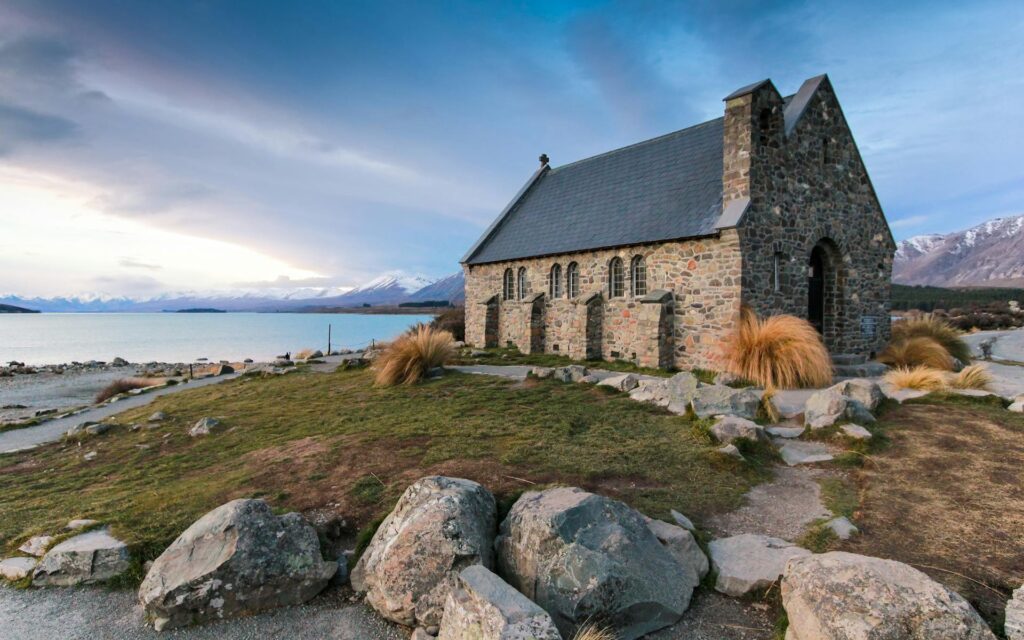
Worldwide envy of a postcard often finds its earthly counterpart here. Lake Tekapo’s water possesses an unnaturally vivid turquoise hue, a consequence of glacial flour—the delicate ground rock that glacial melt carries, bathing the lake in striking sediment. Nestled along the southern shore, the modest stone Church of the Good Shepherd commands a scene that generations of photographers have sought, yet the actual moment of standing before it confers an intimacy no lens can equal.
[Book Now: Lake Tekapo: Alpine Stargazing Experience with a Guide]
Tekapo lies at the heart of the Aoraki Mackenzie International Dark Sky Reserve, making it one of the premier stargazing sites on the planet. Under a certain clarity of night, the Milky Way arches overhead with a brilliance that invites you almost to reach out. From late November to early January, fragrant blooms of lupins fan out beside the turquoise lake, the colourful tapestry enhancing a skyline that is already the definition of prodigious beauty.
[Read more about Lake Tekapo →]
Lake Pukaki
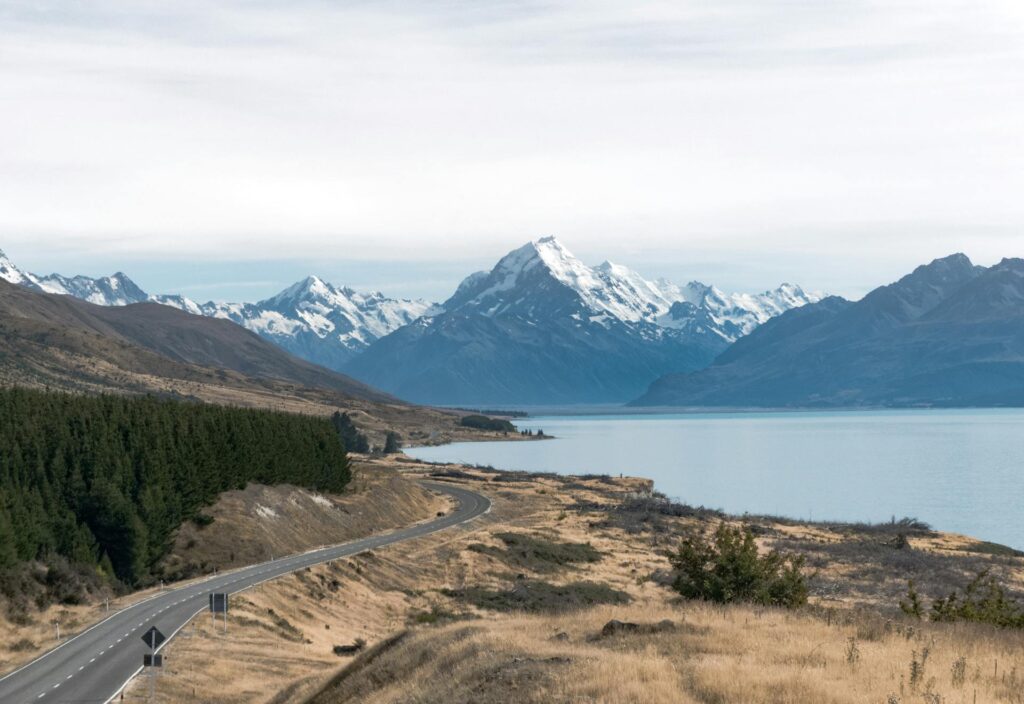
A short forty-minute journey north of Tekapo, Lake Pukaki delivers a scenery that is simply breathtaking. The water glistens a vibrant azure, and each curve of the shoreline draws the eye toward Aoraki / Mount Cook, that sentinel of rock and ice standing far taller than the rest. Beneath a clear sky the colours—a vivid lake, the white of glaciers, the deep azure overhead—convene in a harmony that lodges itself in the memory.
Resting places are generously spaced along the road, each pull-off a gentle invitation for lunch or a moment’s reverie. In the summer the lake liquidly mirrors the encircling giants, a reflection so perfect it momentarily seems drawn from a painter’s dream; in winter, the same giants, now ribbed with snow, project a cool luminosity that is no less astounding.
[Read more about Lake Pukaki →]
Wanaka
Nestled beside the lake, the alpine town of Wanaka offers a great mix of outdoor adventure and a laid-back holiday vibe. Its most photographed attraction is #ThatWanakaTree, a solitary willow anchored in the lake that has become a natural symbol of the region’s beauty. Yet Wanaka is more than a single picturesque subject; it serves as the trailhead for spectacular hikes, the most celebrated being Roy’s Peak, which delivers panoramic vistas of the lake, encircling mountains, and distant islands.
For travellers who want to relax a bit, you can go kayaking and paddleboarding, while a short scenic drive also leads to Mount Aspiring National Park, where river valleys, cascading waterfalls, and gleaming glaciers await. Wanaka’s town centre is dotted with intimate cafés, curated boutiques, and lakeside eateries, creating an inviting atmosphere for those who wish to linger for a day or two.
Arthur’s Pass
Traversing Arthur’s Pass feels like you are stepping into a grand natural cathedral. This high mountain thoroughfare, which traverses the Southern Alps and links the Canterbury and West Coast regions, reveals breathtaking scenery at every curve. Anticipate the sight of deep valleys converging at the base of sheer cliffs, steep spires crowned with snow, alpine meadows bright with native flowers, and ribbons of waterfalls cascading from glacial cirques.
Wildlife enthusiasts will relish the chance to encounter the kea, the only alpine parrot on the planet, whose remarkable intelligence and impudent charm never fail to entertain—merely leave a pack unlaced, and you may find it mysteriously reconfigured. The surrounding terrain offers a hiker’s paradise, presenting options that traverse the spectrum from the brief, invigorating stroll to Devil’s Punchbowl Waterfall to the more strenuous scrambles above the bush line. If your itinerary permits only the briefest of stops, the evolving vistas along the drive alone ensure that Arthur’s Pass lingers in the memory long after you’ve moved on.
Where to Stay & Eat in the South Island
One of the great pleasures of a South Island road trip lies not only in the scenery but also in the places to rest and the equally delightful meals that punctuate the journey. Whether you prefer a stylish boutique hotel, a decent hostel that doesn’t stretch the budget, or a remote lodge in the wild, the South Island accommodates every traveler’s taste.
Recommended Stops En Route
On the drive from Christchurch to Queenstown, you will find a varied range of lodging options:
Lake Tekapo – I always advise spending a night here if you can. Lodging ranges from a stripped-back lakeside motel to cabin setups in the holiday park and, for those wanting a little luxury, the lakeside Peppers Bluewater Resort.
Mount Cook Village – If Aoraki/Mount Cook National Park is in your plans, guarantee yourself at least one night here. Choices abound, from a lively yet affordable hostel to the storied Hermitage Hotel, with every window offering a plate-glass view of the soaring peaks.
Wanaka – The lakeside town of Wanaka combines upscale hotels, inviting Airbnbs, and backpacker-friendly hostels. Ski season brings crowds, so I advise booking well ahead—rooms vanish fast.
Queenstown – Touted as the adventure capital, Queenstown presents a spectrum of places to stay. I favour high-end retreats such as Eichardt’s Private Hotel, but the same street has budget-friendly hostels and basic motels side by side. I suggest settling near the centre; that way, you can stroll to eateries and excursions, sparing yourself the hassle of parking.
Small towns like Oamaru and Moeraki sprinkle the Christchurch to Dunedin Coastal Route with homely B&Bs that showcase regional charm. Travelling from Nelson to Christchurch via Kaikoura, I often pause at cheerful seaside motels and quaint stays among the vines.
Those bound for Milford Sound should plan ahead—only the Milford Sound Lodge sits inside the fiord. Most visitors stay in Te Anau, where a broad selection spans no-frills motels to refined lakeside retreats.
Local Eateries & Regional Specialties
A South Island road trip warrants a full embrace of the local food culture. Every region boasts signature flavours, and at every stop, I deliberately taste whatever I haven’t tried before.
Christchurch—Begin your exploration with flaky pastries and expertly brewed coffee at a neighbourhood café, then wander the city’s burgeoning craft breweries.
Lake Tekapo—Pause at a nearby café for a salmon bagel assembled with Mount Cook Alpine Salmon brought in that morning.
Mount Cook—After a full day on the trails, relax at The Hermitage Hotel’s dining room, where the plate and the Southern Alps share equal billing.
Wanaka—Sample the lakeside wine bars, then cap the day with a scoop—or three—of Patagonia Chocolates’ renowned gelato.
Queenstown—A visit here demands a Fergburger, its queue a small price for the peak-season flavour. For a swanker evening, reserve a table at one of the award-winning places where the meal and the panorama arrive in tandem.
Oamaru and Moeraki—This coastline is seafood utopia. Fleur’s Place, the converted boat shed at Moeraki, serves flounder, green-lipped mussels, and clams that still taste of the swell.
Kaikōura—Pull into the caravans and wooden huts that line the roadside; the crayfish here, brisket grilled in garlic butter, is your souvenir of the shore.
Must-Know Things Before You Hit The Road
One lesson I’ve taken away from years of South Island road trips is that no amount of natural splendour can compensate for inadequate preparation. The Island’s landscapes are staggering, yet its long, lonely corridors, capricious weather, and sparse services mean that a small number of pragmatic measures can mean the difference between effortless discovery and last-minute panic.
Hiring the Right Vehicle
Your vehicle will quickly become your closest companion. I advise reserving a car as early as possible, especially between December and February, when the summer surge is fierce. Christchurch and Queenstown Airports host the major international brands, yet local firms such as Jucy, Apex, and Ezi Car Rentals often run competitive pricing.
If your itinerary includes the less-travelled corridors—those metal-skinned roads toward Mount Cook’s high-country lakes or the remote inlets of the Catlins—confirm that your rental’s policy includes that terrain; restrictions on gravel roads are common, and a breach can incur unexpected costs or void insurance.
Small cars suit the South Island best, in my view, for their agility in the tight alpine curves and the slender coastal ribbons of tar. Yet, if children, camping equipment, or luggage bulk are part of the equation, a mid-size SUV justifies the extra space. Remember, though, to insist on unlimited mileage; on a journey of this length, it is non-negotiable.
You can use the quick form below to get details about Rental Cars
Essentials for Packing the South Island
The South Island operates under the old adage, “Four seasons in a day.” I’ve experienced bright morning skies, torrential mid-day downpours, a blustery lunch, and a snow-tipped evening sunset—every segment collapsed neatly into the same twelve-hour window. Packing in layers is the only defense. My standard kit includes:
- — a lightweight, waterproof shell that breathes
- — insulating mid-layers such as a fleece or merino sweater
- — sturdy, comfortable walking shoes and, for summertime, a pair of sandals
- — high-SPF sunscreen and wraparound sunglasses, because UV levels here are unusually high
- — a sturdy, refillable water bottle, as the tap water is consistently potable
- — a compact power bank for on-the-road device charging
- — a foldable set of reusable shopping bags, since plastic bags incur a charge
If the winter months of June through August are your travel window, supplement with a thermal base layer, insulated gloves, and a fitted beanie. Venturing into elevated terrain means bringing snow chains—be certain you understand how to fit them, as certain passes demand compliance under icy road conditions.
Recognising the Weaknesses of Mobile Coverage
In New Zealand’s backcountry, the first traitorous detail is the disappearance of mobile signal. The interludes of Arthur’s Pass, the Haast Pass, and the remote stretches of the West Coast can deliver hours of disconnection. Before departure, I download offline Google Maps, but I also slip a paper atlas into the glove compartment: dated, yet irrefutably dependable.
For longer walks into national parks, I record the trail maps beforehand and alert a friend to my itinerary. Department of Conservation visitor centres remain the best source for last-minute news on road closures and track conditions, their rangers keeping a sharper eye on the backcountry than any app.
Understanding Gaps Between Fuel Stops
A habitual error newcomers repeat involves the task of refueling. In the hinterlands, stations do not populate the roads. The link from Haast to Wanaka, and the stretch from Te Anau to Milford Sound, can pass without a single bowser.
My unbreakable rule is to fill when the gauge dips to half a tank. The margin between caution and crisis shrinks quickly, and a miscalculated gamble on the next nozzle can stymie the day. Aside from the empty threat of the running tank, the cost per litre also sways. In larger towns prices billow; in isolated villages, they climb. I coach visitors to fill the tank when the figure is reasonable, and the road north or south appears longer than expected.
To illustrate route planning:
- Christchurch to Lake Tekapo = 225 km (~2.5 hours)
- Lake Tekapo to Queenstown via Lindis Pass = 256 km (~3 hours)
- Queenstown to Milford Sound = 288 km (~4 hours one way)
- Haast to Wanaka = 142 km (~2 hours)
Although the distances appear modest, the South Island’s roads frequently curve, feature one-lane bridges, and enforce modest speed limits in the countryside. Always allow additional travel time for viewpoints—there will be many worth stopping for.
South Island Road Trip FAQs
1. What is the best month for a South Island road trip?
From my experience, November to April is prime time. Late spring (Nov) offers blooming lupins and fewer crowds, summer (Dec–Feb) brings long sunny days perfect for exploring, and early autumn (Mar–Apr) brings golden foliage. If you’re into snow-capped mountain views without the icy roads, late October or early April can also be magical.
Read my detailed guide on the Best Time to Visit the South Island here.
2. Can you do the South Island without a car?
Yes — but with some compromises. You can rely on buses like InterCity or join guided tours, but you’ll lose the freedom to stop at hidden lookouts, detour to a quiet lake, or linger in small towns. For me, self-driving is the heart of the South Island experience, but if driving isn’t possible, mix public transport with short day tours to cover the highlights.
3. Is driving in the South Island difficult in winter?
It depends on your comfort level with icy or snowy conditions. Winter driving (Jun–Aug) requires caution, especially over mountain passes like Lindis Pass or Arthur’s Pass. Always check road conditions on the NZTA website, carry snow chains (and know how to fit them), and avoid driving at night if temperatures drop below freezing. The upside? Fewer tourists and postcard-perfect snowy landscapes.
Read my Winter Driving in NZ Safety Guide before you go.
4. How long should I plan for a South Island road trip?
At least 7–10 days to comfortably cover the main highlights like Christchurch, Lake Tekapo, Queenstown, and Milford Sound. If you can stretch to 14 days or more, you’ll have time to explore the West Coast glaciers, Abel Tasman, and Dunedin’s coast. My rule of thumb: more days = more magic.
5. Do I need to book accommodation in advance?
In peak summer (Dec–Feb) and during school holidays, definitely. Many popular towns like Queenstown, Wanaka, and Tekapo book out weeks in advance. Outside of these times, you can be a bit more flexible — but I still like booking the first and last nights ahead for peace of mind.
6. Are fuel stops frequent in the South Island?
Not always. On remote stretches (like between Tekapo and Omarama, or along the West Coast), stations can be 100+ km apart. I always top up when my tank hits half — it’s a simple habit that can save a lot of stress.
